
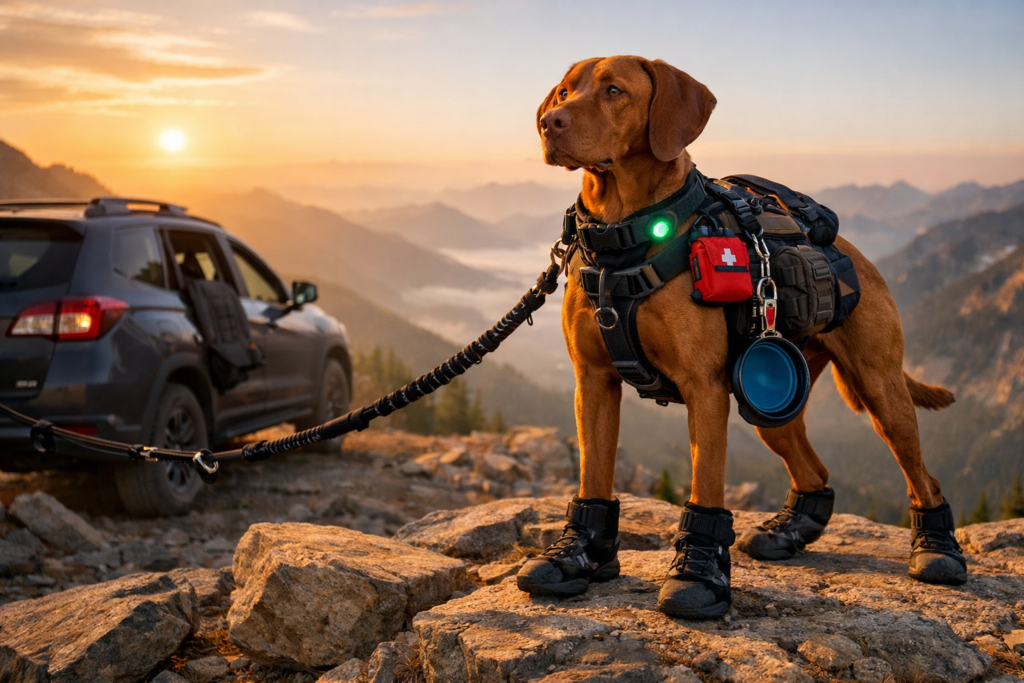
Intro
Dog hiking boots are one of the most debated pieces of trail gear—some dogs need them, others don’t. The decision depends on terrain, climate, paw condition, and how often your dog hikes. This guide breaks down when dog boots are necessary, when paw balms are enough, and how to choose the right trail protection for your dog’s environment and activity level.
As an Amazon Associate, I earn from qualifying purchases. This post may contain affiliate links at no extra cost to you.
Quick Picks
the fastest way to choose trail protection by terrain. Start with these three, then use the full list to match your dog’s paws, weather, and mileage.
- Trail boots for rocky, hot, or salted trails
- Paw balm for daily trail protection (mild to moderate terrain)
- Reflective / LED visibility gear for low-light hikes
Full Shop List
- Rugged dog hiking boots (Vibram-style sole / rock guard)
- Hot pavement / desert boots (heat + abrasion focused)
- Winter boots for snow/ice + salt (waterproof + insulated)
- Dog socks/liners for boot rub prevention
- Paw balm/wax for everyday trail protection
- Paw cleaning wipes (post-hike grit + salt removal)
- Paw wash cup (mud + sand quick clean)
- Reflective vest or LED light for visibility
- Backup leash + carabiner clip (trail redundancy)
- Basic dog first-aid kit (paw-focused)
When Dog Boots Are Necessary
Dog boots are most useful in extreme or abrasive conditions where paws are exposed to repeated stress or injury risk.
- Rocky or sharp gravel trails
- Hot pavement or desert terrain
- Snow, ice, and salted winter paths
- Long hikes on unfamiliar terrain
- Dogs with thin pads, allergies, or prior paw injuries
Choose boots that stay on without cutting circulation. Measure paw width on a standing paw, then follow the brand’s sizing chart. Break boots in indoors first and check for rub at the dewclaw area. For rocky trails, prioritize thicker soles and toe protection; for hot pavement, look for heat + abrasion resistance.
When Dogs Can Skip Boots
Many dogs hike comfortably without boots on moderate terrain, especially if their paws are healthy and conditioned.
- Soft dirt or forest trails
- Short hikes under 3–4 miles
- Mild temperatures
- Dogs with tough, well-conditioned paw pads
Dog Boots vs Paw Balm: What’s Better?
Paw balms provide protection by moisturizing pads and creating a light barrier against friction, while boots offer physical shielding. For many dogs, paw balm is enough for everyday hikes, while boots are best reserved for harsher conditions.
- Boots: Physical protection, traction, injury prevention
- Paw Balm: Moisture barrier, crack prevention, daily use
Quick Picks Trail Safety Picks
- 👉 Dog hiking boots for rocky or hot trails
- 👉 Paw balm for cracked pads & trail protection
- 👉 Reflective harness for low-light hikes
FAQ
Are dog boots safe for hiking?
Yes. Properly fitted boots protect paws without restricting movement. Always size correctly and break them in before long hikes.
Can paw balm replace dog boots?
For mild trails and short hikes, yes. For extreme terrain or temperatures, boots provide better protection.
Do dogs need boots in summer?
Only on hot or abrasive surfaces. Natural trails usually don’t require them.
Build a Safer Trail Setup
- 👉 Best Dog Hiking Harnesses (Trail-Tested Picks)
- 👉 Best Dog Water Bottles for Hiking & Travel
- 👉 Best Dog Paw Balms for Cracked Pads (Trail Protection)
Trail safety isn’t about over-gearing—it’s about choosing the right protection for your dog’s environment. Start simple, observe your dog’s comfort, and upgrade only when conditions demand it.