
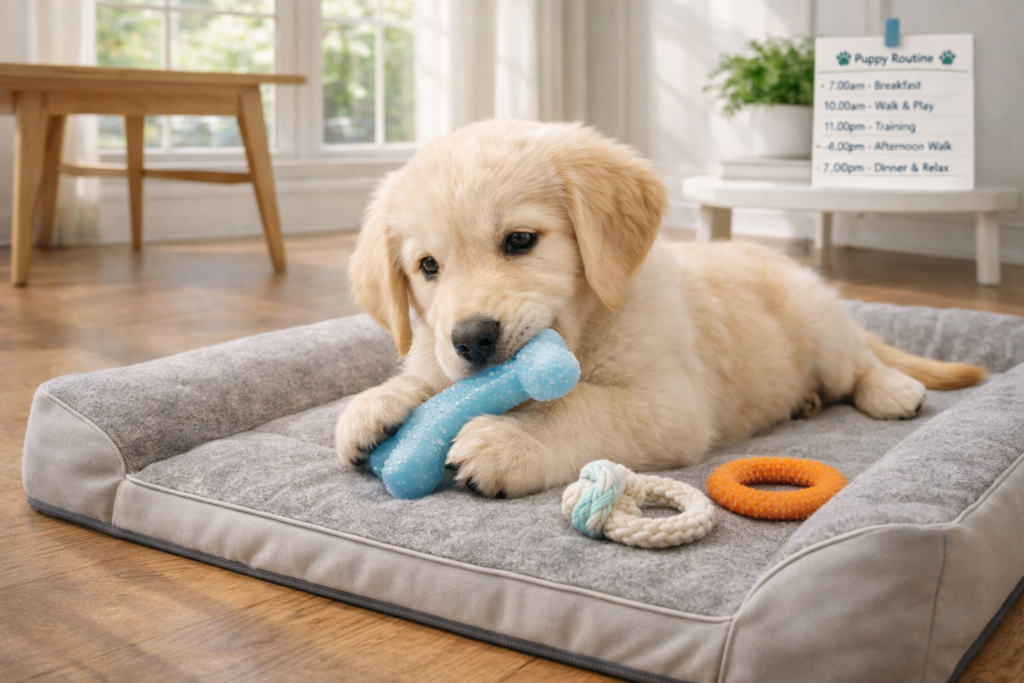
Puppy teething toys are the safest way to give sore gums an outlet without sacrificing your hands, furniture, or crate. This guide compares chew options by material safety, durability, freezer-compatibility, and size so you can build a simple rotation that actually works.
As an Amazon Associate I earn from qualifying purchases.
This post may contain affiliate links; if you buy through links, I may earn a commission at no extra cost to you.
Start Here
Comparison Table
| Pick | Best for | What to look for | CTA |
| Top Pick | Daily teething relief | Soft rubber, puppy-safe materials, easy grip | Check price on Amazon |
| Upgrade Pick | Heavy chewers | Reinforced rubber, textured surfaces, durability | Check price on Amazon |
| Budget Pick | Early teething | Lightweight, simple shape, affordable | Check price on Amazon |
If your puppy is chewing constantly or seems in pain, check your vet’s guidance for teething timelines and oral health.
What to Look For in Puppy Teething Toys (Safety Checklist)
- Use this checklist before you buy puppy teething toys—most problems come from the wrong material or the wrong size.
- Right size: your puppy should not fit the whole toy behind the back molars. If they can, size up.
- One solid piece (when possible): fewer seams = fewer break points. Avoid toys with glued-on parts.
- Material matters: look for puppy-safe rubber or puppy-rated nylon (not hard adult-only chews).
- Texture variety: bumps/ridges help massage gums, but avoid sharp edges that can irritate.
- Freezer-friendly option: a cold toy helps swelling and buys you calm time after meals or walks.
- Crate-safe shape: choose wider shapes that can’t roll everywhere, so chewing stays consistent.
- Easy to clean: if it’s a pain to wash, it won’t stay in the rotation.
What to Avoid (Common Mistakes)
- Bones, antlers, hooves, or extra-hard “adult” chews for puppies (too hard for developing teeth).
- Tiny toys for big chewers (choking risk + faster destruction).
- Rope toys for unsupervised chewing (strings can be swallowed).
- Cracked, sticky, or shedding toys—replace immediately.
Simple 3-Toy Rotation (Prevents Over-Chewing)
Keep 3–5 teething toys out at a time:
- Soft rubber daily chewer (morning / after potty)
- Freezer teether (after meals / evening)
- Textured durable chewer (when they get mouthy)
Rotate weekly so each toy stays “new” and lasts longer.
Quick Picks: Puppy Teething Toys
Quick Picks are the fastest way to shop: choose the style that matches your space, then confirm internal dimensions and ventilation before you buy.
- Top Pick: Soft Rubber Puppy Teether
👉 Check price on Amazon - Upgrade Pick: Durable Textured Teether
👉 Check price on Amazon - Budget Pick: Lightweight Puppy Chew
👉 Check price on Amazon
Full Shop List: Puppy Teething Toys by Type
- Soft rubber teething toys (daily use)
👉 Check price on Amazon - Textured teething toys for gum massage
👉 Check price on Amazon - Freezable teething toys
👉 Check price on Amazon - Durable chews for strong biters
👉 Check price on Amazon - Puppy-safe nylon chew toys
👉 Check price on Amazon - Rope toys for gentle tug & chew
👉 Check price on Amazon - Teething rings with easy grip
👉 Check price on Amazon - Crate-safe chew toys
👉 Check price on Amazon - small-mouth chew toys
👉 Check price on Amazon - Chew toy storage bin
👉 Check price on Amazon
FAQ
How many teething toys does a puppy need?
A small rotation of 3–5 toys is ideal. Rotate weekly to maintain interest and reduce wear.
Can teething toys replace training redirection?
They support it, but supervision still matters. Redirect chewing consistently and reward correct choices.
When should I remove teething toys?
Replace toys once adult teeth are fully in or if toys show damage that could pose a safety risk.