
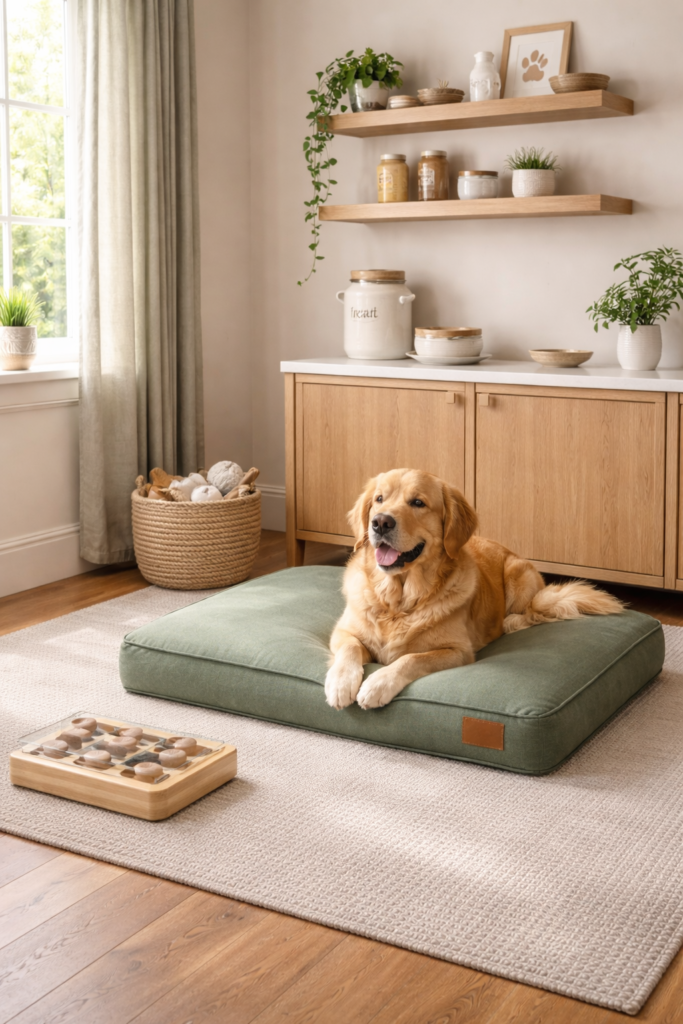
Intro
Orthopedic dog beds shouldn’t look like gym equipment in your living room. The right design blends pressure-relieving support with clean lines, neutral tones, and materials that belong in a modern home.
This guide highlights orthopedic dog beds that support joints and mobility—without disrupting your aesthetic. Start with the Quick Picks for the best balance of comfort + design, then explore the Full Shop List to match your space.
As an Amazon Associate I earn from qualifying purchases.
This post may contain affiliate links; if you buy through links, I may earn a commission at no extra cost to you.
Quick Picks
These are the fastest upgrades with the biggest day-to-day payoff—picked for support, washability, and a clean look. Start here for immediate comfort without a full overhaul.
- Minimalist Memory Foam Bed (Bouclé or Linen Cover)
- • Low-Profile Platform Bed (Wood Frame + Cushion Insert)
- • Sofa-Style Bolster Bed (Structured + Washable Cover)
If you only upgrade one item in your dog’s space, make it the bed. Joint support affects sleep quality, mobility, and long-term comfort.
Quick Start (pick the right size + thickness)
Orthopedic dog beds work best when your dog can stretch out fully without hanging off the edge. Measure your dog from nose to base of tail, then add about 4 inches for the right bed length. For medium to large dogs, aim for 4–6 inches of supportive foam so the bed doesn’t “bottom out.” If your dog is a drooler or you have accidents to manage, prioritize a fully removable washable cover plus a waterproof liner. For hardwood floors, a non-slip base prevents sliding when your dog steps on and off.
Full Shop List
- High-Density Memory Foam Core
- CertiPUR-US Foam Options
- Removable Washable Covers (Neutral Tones)
- Furniture-Style Frame Beds
- Waterproof Liner + Foam Insert
- Bolster Support for Neck & Spine
- Cooling Gel Memory Foam Option
- Minimalist Raised Bed Platforms
- Extra-Thick Support for Large Breeds
- Designer Covers (Linen, Canvas, Bouclé)
Orthopedic bed buying rules (fast)
Style match: pick a cover that matches your home (linen/canvas/bouclé textures; neutral tones like cream, taupe, charcoal).
Foam thickness: aim for 4–6 inches of supportive foam for medium/large dogs; small dogs can use less.
Edge support: if your dog leans or likes bolsters, choose a bed with structured sides or a firmer perimeter.
Covers: fully removable + machine washable is non-negotiable. If you have a drooler, add a waterproof liner.
Floor grip: a non-slip base matters on hardwood so the bed doesn’t slide when your dog steps in.
Sizing: measure your dog stretched out and add ~4 inches. If between sizes, size up.
How to Choose Without Ruining Your Space
- Match your floor tone (warm wood vs cool gray)
- Keep bedding neutral (cream, taupe, charcoal)
- Avoid oversized beds in small rooms
- Choose washable fabrics for longevity
FAQ
Are orthopedic beds worth it for younger dogs?
Yes. Preventative joint support reduces strain before mobility issues develop.
How thick should an orthopedic bed be?
Look for at least 4–6 inches of high-density foam for medium to large dogs.
Do modern orthopedic beds still provide enough support?
Yes—design-forward beds now combine high-density foam with structured covers and durable frames.