
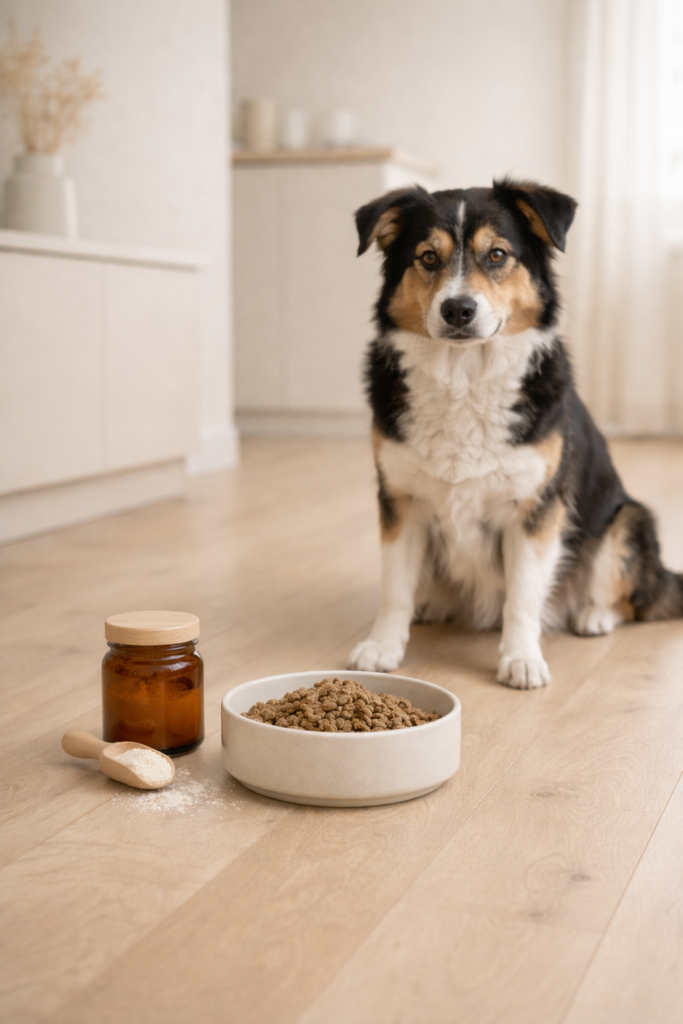
A dog probiotic for sensitive stomach can help support stool consistency, reduce stress-related digestive upset, and make food transitions easier—when the strain list, dosing, and delivery format match your dog.
As an Amazon Associate, I earn from qualifying purchases.
⭐ Top Pick: Daily Probiotic Powder for Sensitive Stomachs
Why this works
- Powder format allows flexible dosing
- Easier to mix with food than capsules
- Typically gentler for dogs with chronic sensitivity
What to look for
- Clearly listed bacterial strains
- Moderate CFU count (not excessive)
- No artificial sweeteners or fillers
For many dogs, the best dog probiotic for sensitive stomach is the one they’ll take consistently and that keeps stools stable over time.
Best Alternatives by Situation
Best Alternatives by Situation
1. For dogs with recurring loose stool
- Look for single-strain or limited-strain formulas
- Avoid “mega CFU” blends
2. For stress-related digestion (travel, routine changes)
- Shelf-stable powders with consistent dosing
- Easy daily use without cycling
3. For picky eaters
- Odorless or lightly flavored powders
- Mixes cleanly without clumping
How to Choose a Dog Probiotic for Sensitive Stomach
Use this quick checklist before you buy:
- Strains listed (not “proprietary blend” only): Look for a clear strain list so you know what you’re giving.
- Moderate CFU count: More isn’t always better for sensitive dogs. Start moderate and increase only if needed.
- Delivery format: Powders mix easiest for picky eaters; chews can work if your dog tolerates them well.
- Simple ingredient panel: Avoid added sugars, heavy flavoring, and unnecessary fillers if your dog reacts easily.
- Storage + freshness: Shelf-stable is convenient for daily use; follow “use within” guidance after opening.
How to Start (Without Making Sensitivity Worse)
- Day 1–3: Start with a half serving mixed into a full meal.
- Day 4–7: Move to the full serving if stools stay stable.
- One change at a time: Don’t change food, treats, and supplements all at once.
- Consistency matters: Use daily for at least 10–14 days before you decide if it’s a fit.
When to Use a Probiotic (Common Triggers)
- Food transition or new treats
- Stress (boarding, travel, routine changes)
- Occasional loose stool or gas
- After a digestive upset (once your dog is eating normally again)
When to Pause and Ask Your Vet
If there’s blood in stool, repeated vomiting, dehydration, severe lethargy, or symptoms lasting more than a couple days, stop experimenting and contact your vet.
Why probiotics help sensitive stomachs
Sensitive digestion often comes from imbalance, not illness. Probiotics help by:
- Supporting stool consistency
- Improving nutrient absorption
- Reducing digestive stress during diet changes
The key is consistency—choose one product and use it daily before switching again.
FAQ
How long does it take to see results?
Most dogs show changes within 5–10 days when used consistently with meals.
Should I use probiotics every day?
Yes. Daily use supports stability. Cycling frequently can worsen sensitivity.
Can puppies or seniors use probiotic powder?
Most powders are safe for all ages, but dosing should match weight and tolerance.